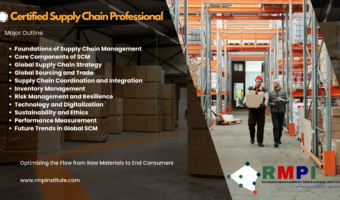
CSCP™ CERTIFIED SUPPLY CHAIN PROFESSIONAL
About This Course
CERTIFIED SUPPLY CHAIN PROFESSIONAL (CSCP™)
The CSCP™ (Certified Supply Chain Professional) is the globally recognized standard for end-to-end supply chain expertise. It validates your ability to manage the entire supply chain — from suppliers and production to distribution and customer delivery.
Who it’s for: Supply Chain Managers, Demand Planners, Procurement Professionals, Logistics Managers, and Operations Consultants.
Why CSCP™?
· Globally recognized — trusted by employers worldwide
· Higher earning potential — certified professionals earn more
· End-to-end mastery — understand how every link connects
· Strategic credibility — contribute to business strategy, not just operations
What You’ll Master
Domain Focus
Supply Chain Design Networks aligned with business strategy
Demand Management Forecasting and supply-demand alignment
Global Networks Cross-border complexity management
Sourcing & Procurement Supplier strategy and contracts
Operations & Inventory Planning, production, inventory control
Logistics & Distribution Network design and product flow
Relationships Customer and supplier partnerships
Risk & Optimization Mitigation and continuous improvement
Benefits
· Earn the CSCP™ designation
· RMPI membership certification and professional activities access
· Global network of supply chain professionals
· Positioned for senior roles in operations and strategy
Training Duration & Evaluation
Component Details
Training Duration 8 weeks
Examination
Practical + Continuous Assessment
Assessment Duration
Exam Format
Exam Platform RMPI online learning platform
Ready to Lead the Supply Chain?
[Enroll in CSCP™ →] [Get Access To Brochure Online →] [Talk to an Advisor →]
Curriculum
What Is Supply Chain Management (SCM)?
INTRODUCTION TO SUPPLY CHAIN MANAGEMENT
2.0 SUPPLY CHAIN STRATEGY
3.0 NETWORK AND SYSTEM DESIGN
4.0 MARKETING
5.0 OPERATIONS MANAGEMENT
Your Instructors